
Data inventory and quality control
Reconcile seismic interpretation, well logs, core, test results and field measurements. Check depth references, stratigraphic correlations and inconsistencies between data sources.
NGB / SUPERVISING & PRODUCTION ENGINEERING
We bring together geological evaluation, reservoir management and wellsite supervision. From programme review and contractor coordination to well-performance analysis and substantiated production optimisation measures.
Agreed hold points, traceable decisions and performance evaluation based on measured data.
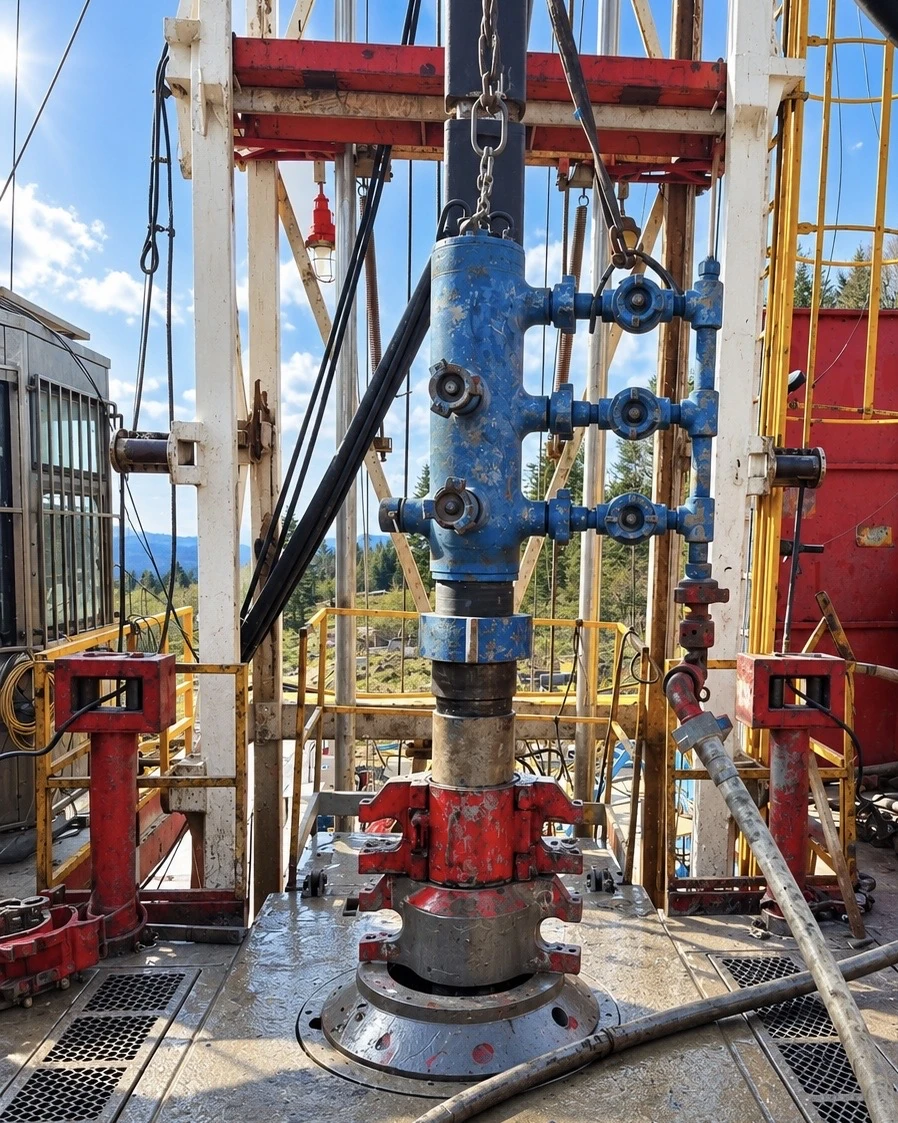
We review the geological and geophysical basis of a project: data consistency, reservoir interpretation and the assumptions behind the evaluation. Findings support a defined decision on drilling, well testing or updating the field model.
Reconcile seismic interpretation, well logs, core, test results and field measurements. Check depth references, stratigraphic correlations and inconsistencies between data sources.
Review structure, net reservoir thickness, porosity, permeability, saturation and fluid contacts. Assess how these inputs affect hydrocarbon volume estimates.
Identify critical data gaps and the sensitivity of conclusions to assumptions. Prioritize additional data acquisition and appraisal work required before the next project stage.
A technical review of data quality and the geological concept, an uncertainty register and a recommended appraisal program. A formal reserves assessment is defined under a separate scope.
Integrate the geological model, production history and test results to support the development strategy. Compare well-stock options against reservoir pressure behavior, well interference and surface-facility constraints.
Analyze rates, cumulative production, reservoir and bottomhole pressures, water cut and fluid composition. Identify depletion trends, productivity changes and areas requiring further investigation.
Where data support it, update the dynamic model and history match. Compare offtake strategies, infill drilling, well reactivation and reservoir-intervention scenarios.
Prioritize wells for testing and intervention, define surveillance indicators and forecast-review intervals. Link the monitoring program to field-development decisions.
Scenario comparisons, production forecasts with uncertainty ranges, a prioritized well-stock work plan and a reservoir-surveillance program.
Represent the client’s technical interests at the wellsite by monitoring execution against the approved program, the quality of critical operations and readiness for stage transitions. Coordinate the drilling contractor and service companies, and document deviations and technical decisions.
Review the operation sequence, subsurface and operational risks, and rig and service readiness. Agree hold points, acceptance criteria and contractor interfaces before each stage.
Monitor depth, footage, rate of penetration, drilling parameters and drilling-fluid properties. Review program deviations, wellbore conditions and tripping performance with the relevant service specialists.
Monitor barrier status, completion of the BOP test program and test records. Verify responsibilities and team readiness to respond to deviations under the approved procedures.
Check casing inventory, documentation and tally against the casing program. Monitor running, connections, setting depth and pressure-test results; record nonconformities before stage acceptance.
Compare the approved program with actual volumes, slurry properties and pumping parameters. Review the cementing report and available isolation-evaluation data, recording results and deviations.
Oversee execution of the testing program, installation of completion equipment and acceptance checks. Reconcile the as-built well configuration, barrier status and documentation before handover to the client.
Operational meetings, coordination of simultaneous activities and shift handovers. Program changes undergo risk review and client approval, with decisions and accountable parties recorded.
Daily reports covering the operation timeline, technical parameters and next-day plan. Track productive and non-productive time (NPT), deviation causes, completed work and corrective actions.
Daily reports, checklists and test records, a deviation and approved-change register, stage-acceptance records and an end-of-well report.
Evaluate the producing well as part of the reservoir–well–surface network system. Locate production constraints, compare optimization options and define the measurements needed to verify intervention results.
Analyze rates, pressures, water cut and operating history. Interpret well tests, pressure build-up and production logs to distinguish reservoir limitations from wellbore constraints.
Calibrate the model against measurements and compare inflow performance (IPR) with vertical lift performance (VLP). Evaluate the influence of tubing, wellhead equipment and network backpressure on operating conditions.
Compare compression, deliquification, artificial lift, selective water shut-off and stimulation options. Assess technical feasibility, constraints, costs and post-intervention measurement requirements.
Pressure, flow properties, inflow and depletion behavior.
Completion configuration, pressure losses, liquid loading and lift-system capability.
Backpressure, gathering conditions, compression and processing constraints.
A measurement-calibrated model, constraint register, recommended operating range and comparison of technical and economic options. Startup and shutdown transients are assessed separately from steady-state operation.
Well program and configuration, geological and operational data, work and production history, and test results.
An agreed work scope, authority limits, hold points and decision process between the client, supervisor and contractors.
Reporting format and frequency, stage-acceptance criteria, as-built documentation and performance-review arrangements.
Share the project stage and the technical challenge. We will define the data required and the scope of engineering support.
office@ngb.ua